
Twenty-four of the top South African beaches that have achieved Blue Flag status for the forthcoming 2015/16 season have also received special recognition for their sustained commitment to marine and coastal conservation through their long-term and continuous participation in the international Blue Flag Programme.
The commendable achievements of the stakeholders responsible for the success of these beaches were formally acknowledged with the presentation of awards at the launch event for the 2015/16 Blue Flag Season. The new Blue Flag season opens officially on 1 November and the launch event took place at Grotto Beach in Hermanus in the Overberg region today.
The new long-term achievement awards have been introduced to mark the fifteen year anniversary of the implementation of the international Blue Flag programme in South Africa. This respected eco-label has been implemented by WESSA since 2001, with the support of coastal municipalities and conservation parastatals.
A remarkable 24 beaches have been on the programme for more than five consecutive years, and two of these have participated for all fifteen years that the programme has been running locally. The awards also acknowledge and celebrate the sustained partnerships that WESSA has built with key municipalities around the country, who have recognised the value of Blue Flag not just to the environment but also to tourism, economic development and job creation.
This year’s launch event was hosted by the Overstrand Municipality and was attended by Minister of Tourism Derek Hanekom, Overstrand Municipality executive mayor Nicolette Botha-Guthrie, WESSA CEO Dr Thommie Burger and WESSA Blue Flag Programme Leader Vince Shacks. The attendance of the Minister of Tourism at the event for several years running is confirmation of government’s strong support for the Programme.
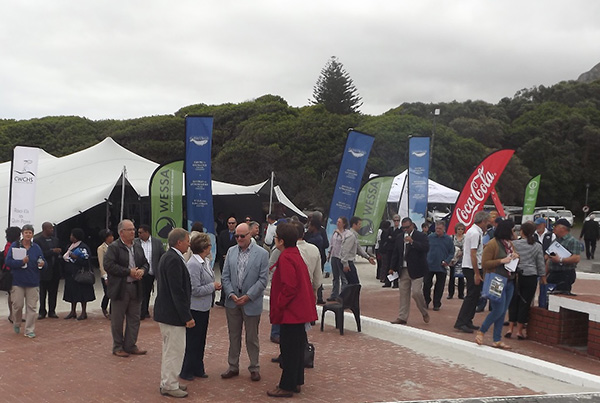
Speaking at the event Minister Hanekom stressed how important the Blue Flag programme is to South Africa, as we have 3,200km of coastline with an amazing variety of coastal marine life. Referring to Operation Phakisa, the ocean economy and job potential around our coastline, the Minister said that he believes the job potential of tourism underestimated and underrated in South Africa, and added that it is the beaches that attract tourism and that create jobs. He believes that the vision for the Blue Flag should be that it becomes the norm for South Africa’s beaches to have Blue Flag status.
Minister Hanekom announced that WESSA and the Department of Tourism are entering into a formal partnership with a coastal job creation project, which will involve 200 people working on Blue Flag beaches all around the country. This project, to be managed by WESSA, will create employment for people living along our coastal areas who will work to help beaches maintain their Blue Flag status, to keep the environment healthy and to improve the experience of beach-goers. This will in turn lead to more tourism, new industries and more jobs.
The decisions of the international Blue Flag jury for the upcoming 2015/16 South African season were announced at the launch event. These are that 39 beaches, 9 boats and 6 marinas have achieved Full Status, and a further 30 beaches have been awarded Pilot Status, which is an important developmental state for potential Blue Flag sites. The jury results include 49 Blue Flag sites in the Western Cape, 19 sites in KwaZulu-Natal and 16 sites in the Eastern Cape. All of the sites that applied for Blue Flag status underwent a rigorous approval process involving both local and international assessments.
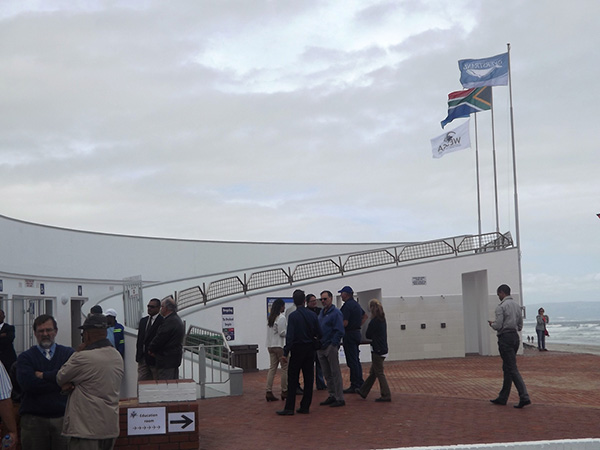
What is particularly remarkable about the 2015 international jury results is the number of Pilot Status beaches participating on the programme. WESSA has broadened the programme’s reach this year by encouraging more Pilot Status applications from new beaches, and then working closely with coastal municipalities to provide support during this important “incubation period” towards the longer term goal of achieving Full Status for these beaches. This support includes training in the maintenance of the Blue Flag standard, as well annual workshops in which municipal managers are given exposure to each other’s programmes and to best practice.
Another noteworthy aspect of this year’s Blue Flag programme is the focus on the private, recreational boating sector, where boat owners have been encouraged support their municipality’s commitment to making a positive contribution to marine and coastal conservation by also joining the programme.
WESSA aims to strengthen the implementation of the Blue Flag eco-label in this important branch of marine and costal tourism by subjecting participating private and eco-tourism boats to the same control visits and audits as for beaches and marinas. The criteria for participating boats have become more stringent such that responsible interaction with marine wildlife, better environmental management and education are all required.
The success of WESSA’s Blue Flag programme would not be possible without the support of coastal municipalities and conservation parastatals. WESSA is grateful to the Department of Environmental Affair’s “Working for the Coast” Programme that contributes to the successful operation and upgrade of many Blue Flag Beaches. The assistance of the Ford Wildlife Foundation, who make a vehicle available for WESSA’s coastal conservation work, is also greatly appreciated.
For further information about the Blue Flag Programme please visit www.blueflag.org.za
Download the 2015/6 International Blue Flag Jury results for South Africa